Drew Schwarz · 3 September 2026
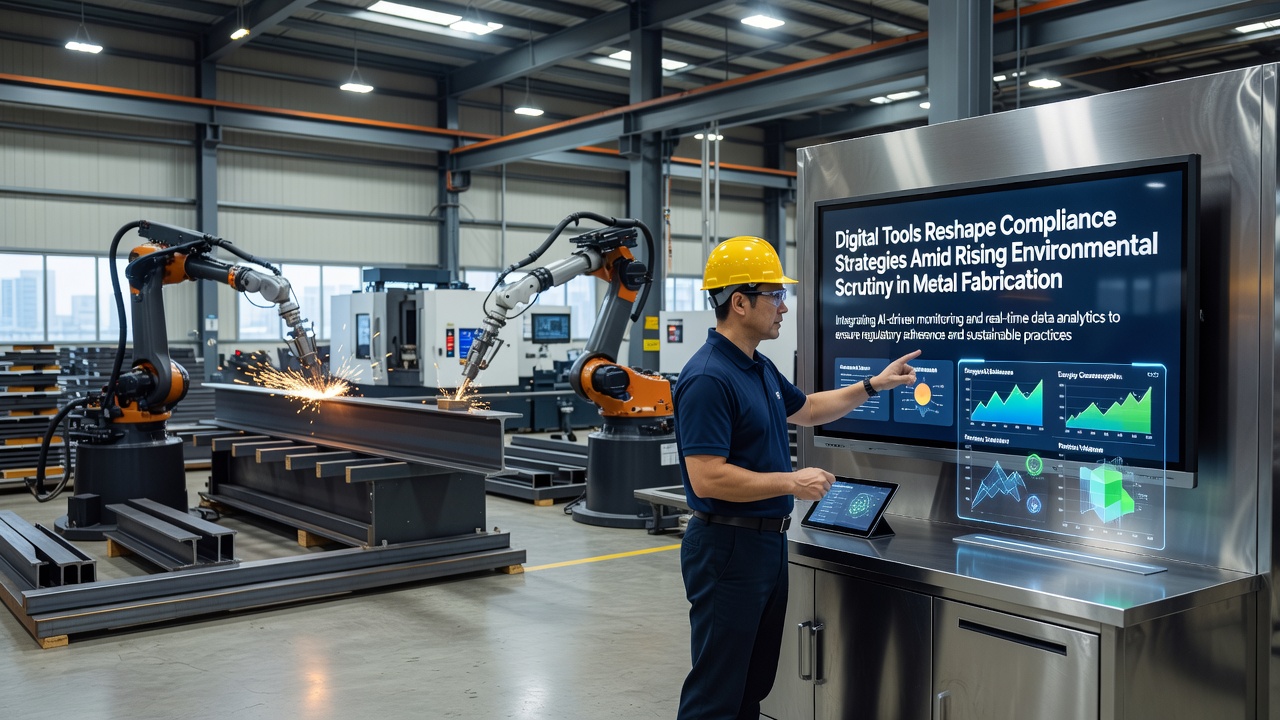
Digital Tools Reshape Compliance Strategies Amid Rising Environmental Scrutiny in Metal Fabrication
Metal fabrication facilities face mounting pressure from environmental regulations that target emissions, waste handling, and resource consumption, and digital platforms now help managers track these factors in real time. Data from the U.S. Environmental Protection Agency shows that metal processing plants account for a measurable share of industrial greenhouse gas output, which prompts facilities to adopt software that logs energy use and material flows without manual spreadsheets. Observers note that this shift gained momentum as agencies tightened reporting thresholds in 2025, and the pattern continues into September 2026 when new disclosure rules take effect across multiple jurisdictions.
Regulatory Changes Drive Adoption
European regulators updated the Industrial Emissions Directive in late 2025, requiring continuous monitoring of volatile organic compounds and heavy metal discharges from fabrication lines, while the U.S. EPA expanded its Toxics Release Inventory criteria to include additional alloys and coatings. Research indicates that facilities using integrated compliance dashboards reduced reporting errors by 40 percent compared with paper-based systems, according to a 2025 industry benchmark published by the Fabricators & Manufacturers Association. Those dashboards pull sensor data directly from cutting tables, welding cells, and finishing booths, then format the numbers for submissions that must reach authorities within strict deadlines.
Canada's Environment and Climate Change department introduced similar quarterly reporting mandates for facilities above a certain throughput, and manufacturers there report that cloud-based audit trails satisfy inspectors who previously demanded site visits for verification. The European Environment Agency released figures in mid-2026 revealing that plants with digital permitting systems closed compliance gaps faster than peers relying on legacy methods.
Core Technologies at Work
Internet of Things sensors attached to exhaust stacks and coolant systems feed live readings into central platforms that flag deviations before they breach limits, and machine-learning models compare current output against historical baselines to predict when maintenance will keep emissions inside permitted ranges. One fabrication group in the Midwest integrated these sensors with enterprise resource planning software, which automatically adjusts production schedules when air-quality data approaches thresholds, thereby avoiding unplanned shutdowns. Blockchain ledgers now record the chain of custody for scrap metal and hazardous residues, giving auditors an immutable record that satisfies both domestic and export documentation rules.
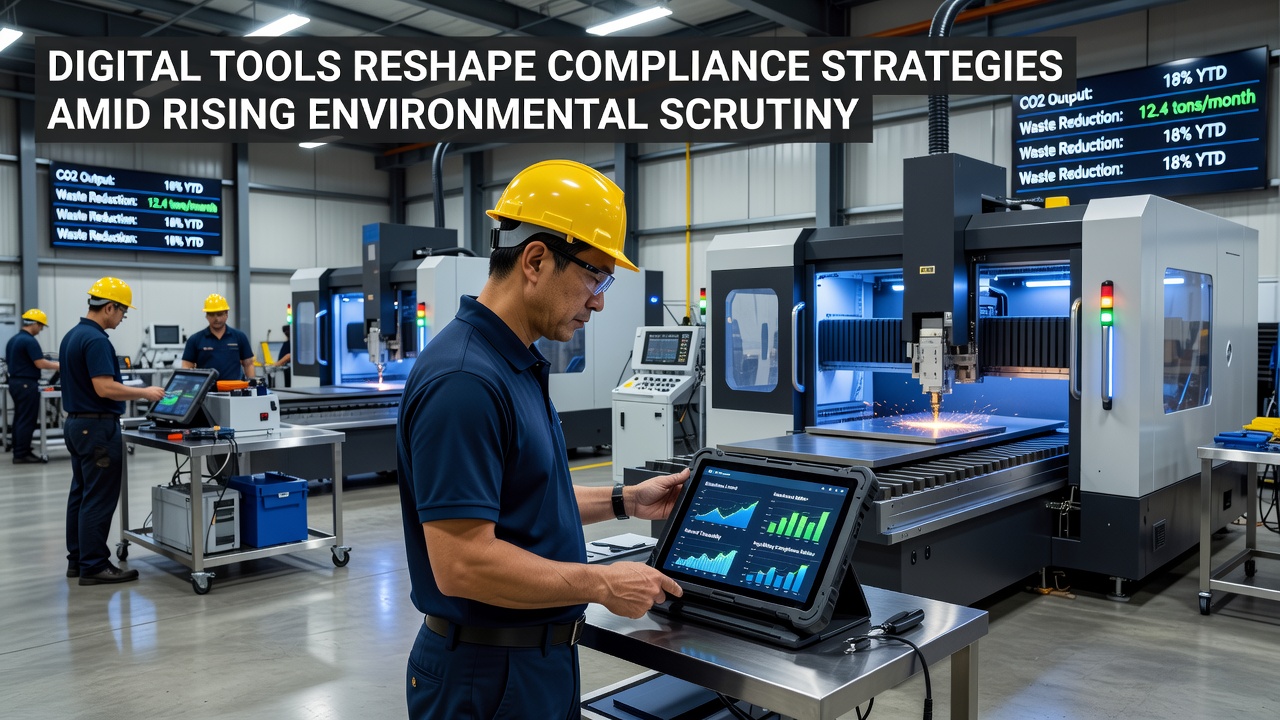
Artificial-intelligence modules scan regulatory updates from multiple agencies and map new requirements onto existing process flows, which allows plant engineers to simulate the impact of proposed rule changes before they become binding. A study from the University of Sheffield Advanced Manufacturing Research Centre found that simulation runs cut the time needed to redesign dust-collection systems by nearly half, while maintaining the same safety margins. Mobile applications let floor supervisors photograph waste containers and upload geotagged records that feed directly into monthly compliance reports, eliminating transcription steps that once introduced errors.
Implementation Patterns Across Regions
Smaller shops in Australia adopted subscription-based platforms that bundle sensor hardware with automated reporting, and operators there cite the ability to demonstrate compliance during surprise inspections as a primary benefit. Larger European fabricators, by contrast, built custom integrations between existing manufacturing execution systems and new environmental modules, often with support from national industry associations. In both cases the common thread remains the reduction of manual data entry, which regulators in several countries have flagged as a frequent source of inaccuracies during audits.
Training programs now emphasize data literacy alongside traditional safety and quality skills, because workers must interpret dashboard alerts and decide when to escalate issues to environmental officers. Trade groups report that facilities investing in these programs experience fewer notices of violation during the first year after rollout, although exact percentages vary by region and regulatory stringency.
Conclusion
Digital compliance tools continue to evolve alongside tightening environmental standards in metal fabrication, and facilities that connect sensors, analytics, and reporting systems gain clearer visibility into their operational footprint. As September 2026 approaches, agencies on both sides of the Atlantic prepare to enforce expanded data requirements, and the plants already equipped with integrated platforms stand ready to meet those expectations through automated collection and verification processes.