Petra Müller · 29 October 2026
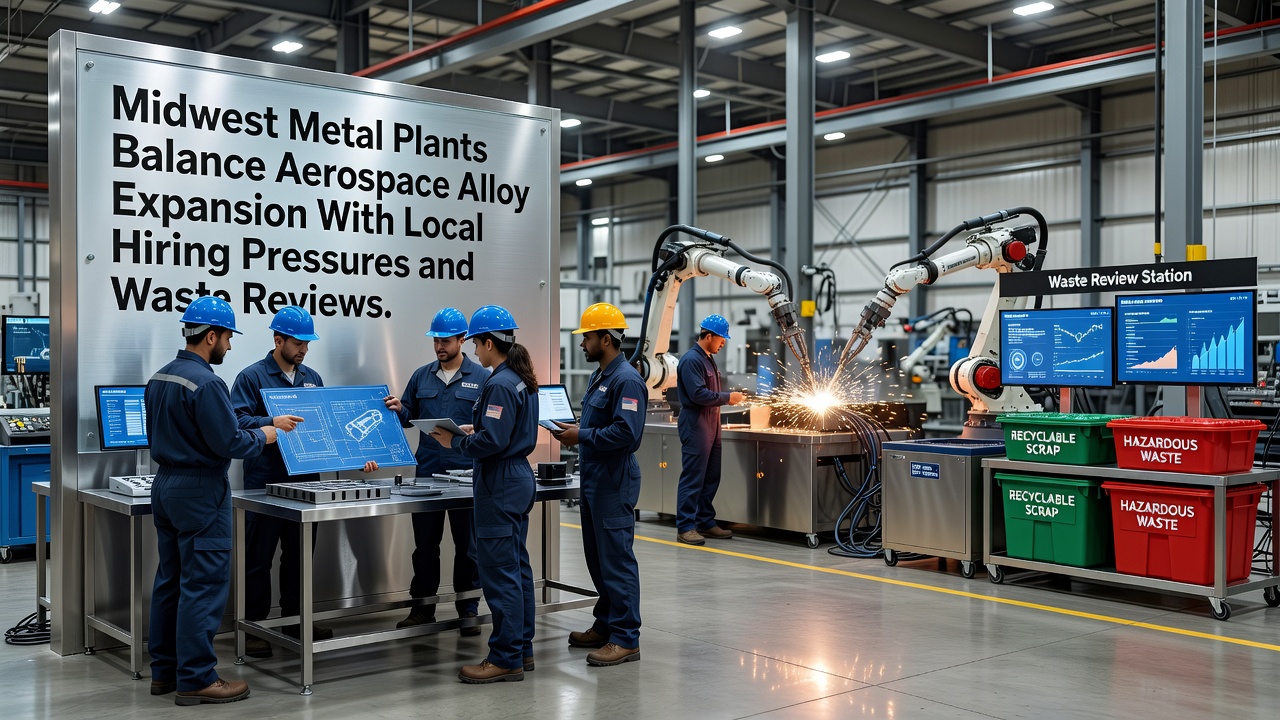
Midwest Metal Facilities Expand Aerospace Production While Managing Workforce Demands and Environmental Assessments
Midwest metal plants have increased output of specialized aerospace alloys in recent years as demand from aircraft manufacturers continues to rise, yet these operations must simultaneously address labor shortages in surrounding communities and conduct detailed reviews of waste handling procedures. Plants across Ohio, Indiana, and Illinois report higher volumes of titanium and nickel-based alloys destined for jet engine components, while local hiring offices note persistent gaps in skilled machinists and metallurgists available for shift work.
Aerospace Alloy Demand Drives Capacity Increases
Production schedules at several facilities show expanded runs of high-temperature alloys throughout 2025 and into October 2026, supported by contracts tied to commercial and defense aviation programs. Data from industry tracking services indicate that Midwest suppliers account for roughly 35 percent of domestic aerospace-grade alloy shipments, a share that has grown as overseas sourcing faces additional logistical hurdles. Equipment upgrades at rolling mills and heat-treatment lines allow faster throughput, though operators must coordinate these changes with existing maintenance cycles to avoid downtime.
Raw material inputs arrive from both domestic mines and overseas smelters, creating complex supply chains that require frequent quality audits. Facilities track trace-element consistency across batches because even small deviations can affect performance in turbine blades or structural fittings. Engineers at one Indiana plant documented a 12 percent rise in alloy tonnage processed during the first three quarters of 2026 compared with the prior year, reflecting steady order books rather than speculative inventory building.
Workforce Pressures Shape Hiring Strategies
Local employment offices in metalworking regions report that applicants with experience in CNC programming or nondestructive testing remain difficult to recruit, prompting plants to partner with community colleges for apprenticeship programs. Wage data compiled by state labor departments show average hourly rates for experienced alloy handlers climbing between 4 and 7 percent annually since 2023, yet turnover rates hover near 18 percent in some plants due to competition from automotive and energy sectors. Human resources teams now emphasize cross-training so that operators can move between melting, forging, and finishing departments as production volumes fluctuate.
Recruitment campaigns extend beyond traditional job boards to include targeted outreach at technical high schools and veteran career fairs. One Illinois facility reduced its open positions from 47 to 22 over an eight-month period after introducing paid internships that convert into full-time roles upon certification. Observers note that retention improves when schedules incorporate predictable overtime windows rather than last-minute call-ins, a scheduling adjustment several plants adopted after employee feedback sessions.
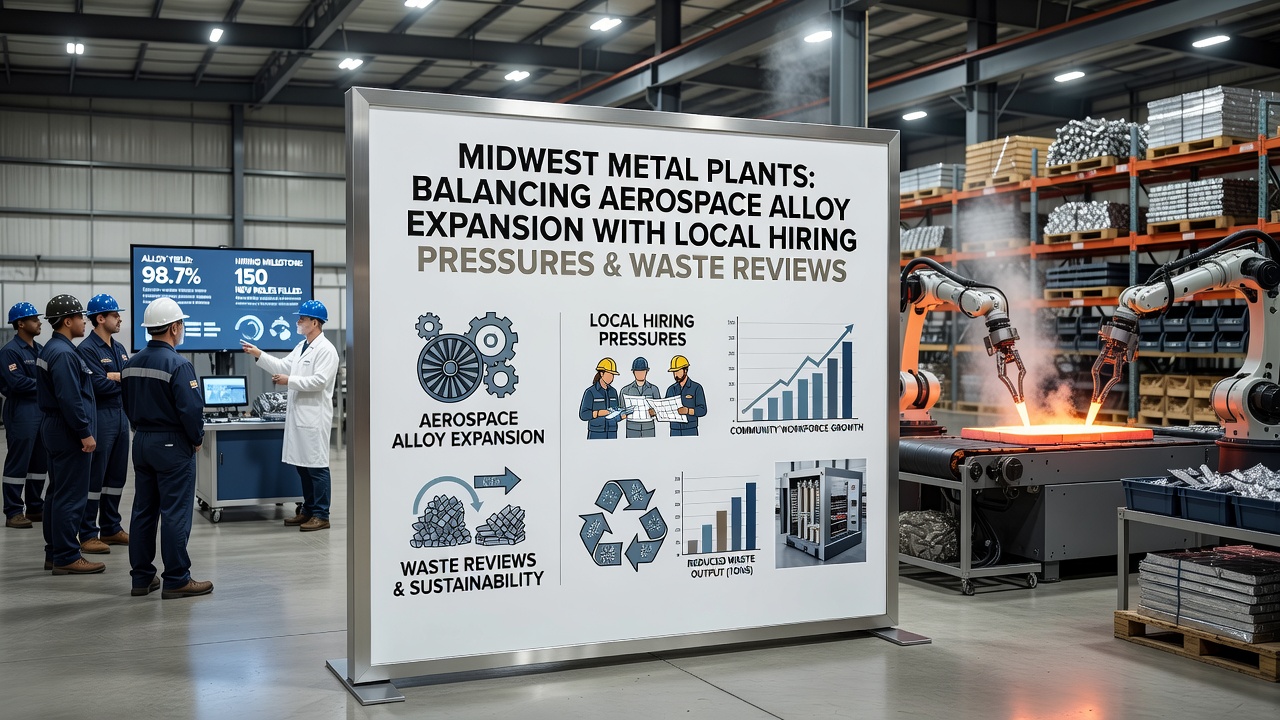
Waste Handling Reviews Align With Regulatory Updates
Environmental compliance teams at these plants now perform more frequent audits of sludge, coolant, and spent refractory materials generated during alloy processing. State agencies in the Midwest updated permitting guidelines in early 2026 that require additional documentation of heavy-metal concentrations before disposal or recycling. Facilities respond by installing real-time monitoring sensors on filtration systems, allowing operators to flag deviations before they exceed permitted thresholds.
Recycling partnerships with specialized processors divert a growing portion of metal-bearing waste back into the supply chain, reducing the volume sent to licensed landfills. Records from one Ohio operation show that 68 percent of nickel-containing scrap was reclaimed in 2025, up from 51 percent two years earlier. These improvements coincide with broader industry efforts to meet voluntary sustainability targets set by aerospace customers, targets that increasingly influence contract renewals.
Third-party auditors conduct annual waste characterization studies that feed into plant-level improvement plans. Such reviews examine both on-site treatment methods and downstream transportation routes, ensuring compliance with federal hazardous-waste rules administered by the Environmental Protection Agency. Plant managers coordinate these findings with capital budgets so that filtration upgrades or closed-loop cooling systems can be phased in without disrupting production lines.
Integration of Expansion, Hiring, and Compliance Efforts
Project timelines at multiple sites illustrate how these three priorities intersect. When a new alloy line comes online, staffing models must account for additional operators and quality technicians while waste-stream projections feed into permit applications submitted months in advance. Coordination meetings now include representatives from operations, human resources, and environmental health and safety departments to surface conflicts early.
Software platforms that track material flows also log labor hours and regulatory submissions, giving managers visibility across functions. One facility in Michigan reported that integrated dashboards helped reduce permit revision cycles from 14 weeks to 9 weeks by surfacing data discrepancies sooner. Such tools do not eliminate the need for experienced personnel, but they allow teams to allocate attention more efficiently across competing demands.
Conclusion
Midwest metal plants continue to scale aerospace alloy output while refining recruitment pipelines and tightening waste oversight procedures. October 2026 data from state manufacturing surveys show sustained capital investment alongside incremental gains in workforce retention and recycling rates. These parallel adjustments reflect ongoing operational realities rather than one-time initiatives, and facilities maintain records that support both production targets and regulatory accountability.