Devon Franke · 1 October 2026
Ohio Metalworking Operations Integrate AI Tools From Anvyl as Labor Market Dynamics Shift
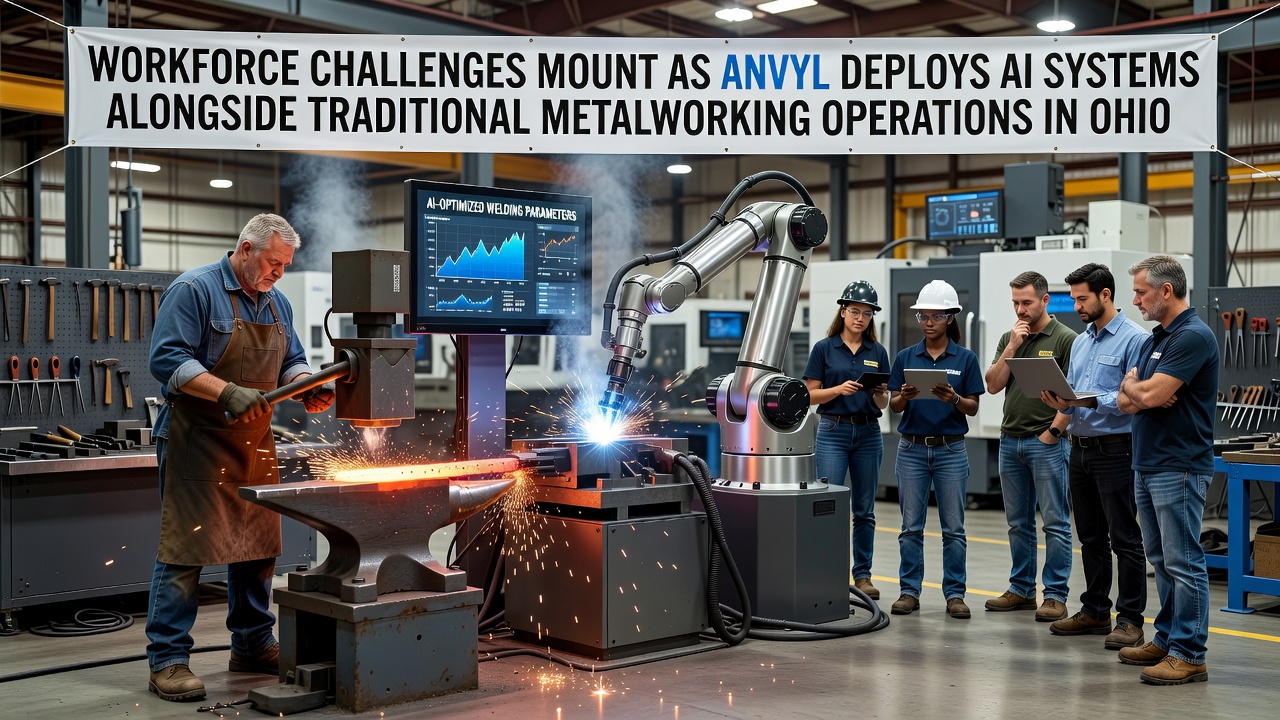
Manufacturing facilities across Ohio have continued to adopt AI-driven platforms from Anvyl throughout 2026, and these deployments coincide with measurable changes in hiring patterns for metalworking roles. Companies report that systems handling inventory tracking, predictive maintenance scheduling, and production optimization now run in parallel with conventional lathes, presses, and welding stations. Employment data compiled by state agencies shows that postings for roles requiring both machine operation experience and basic data interpretation rose steadily from January through September of that year.
Deployment Timeline and Scope
Anvyl began rolling out its integrated AI modules to several mid-sized metal fabricators in the Cleveland and Cincinnati corridors during the first quarter of 2026, and participating sites documented reductions in unplanned downtime ranging from 12 to 18 percent within six months of installation. The software interfaces directly with legacy CNC controllers, pulling sensor readings that feed into algorithms forecasting tool wear and material flow bottlenecks. Observers note that operators who previously managed single machines now monitor multiple stations through centralized dashboards, a transition that has prompted internal training programs at more than a dozen plants.
Workforce Composition Adjustments
Bureau of Labor Statistics figures for Ohio's primary metal manufacturing sector indicate that total employment held steady between 2025 and 2026, yet the proportion of workers classified under "computer and mathematical occupations" within those facilities increased by 7 percent. Training records from participating companies reveal that sessions on AI system navigation averaged 24 hours per employee during the initial rollout phase, while traditional apprenticeship hours for machining fundamentals remained unchanged. This dual requirement has led some plants to revise job descriptions so that new hires demonstrate proficiency in both domains before advancing to unsupervised shifts.
Data from the Ohio Department of Job and Family Services further shows that applications for metalworking positions specifying AI literacy climbed from 22 percent of total submissions in late 2025 to 41 percent by October 2026. Employers have responded by partnering with community colleges in Lorain and Hamilton counties to develop short certification courses that combine shop-floor skills with introductory machine learning concepts, and enrollment in those programs rose 35 percent year-over-year.
Skill Requirements and Regional Comparisons
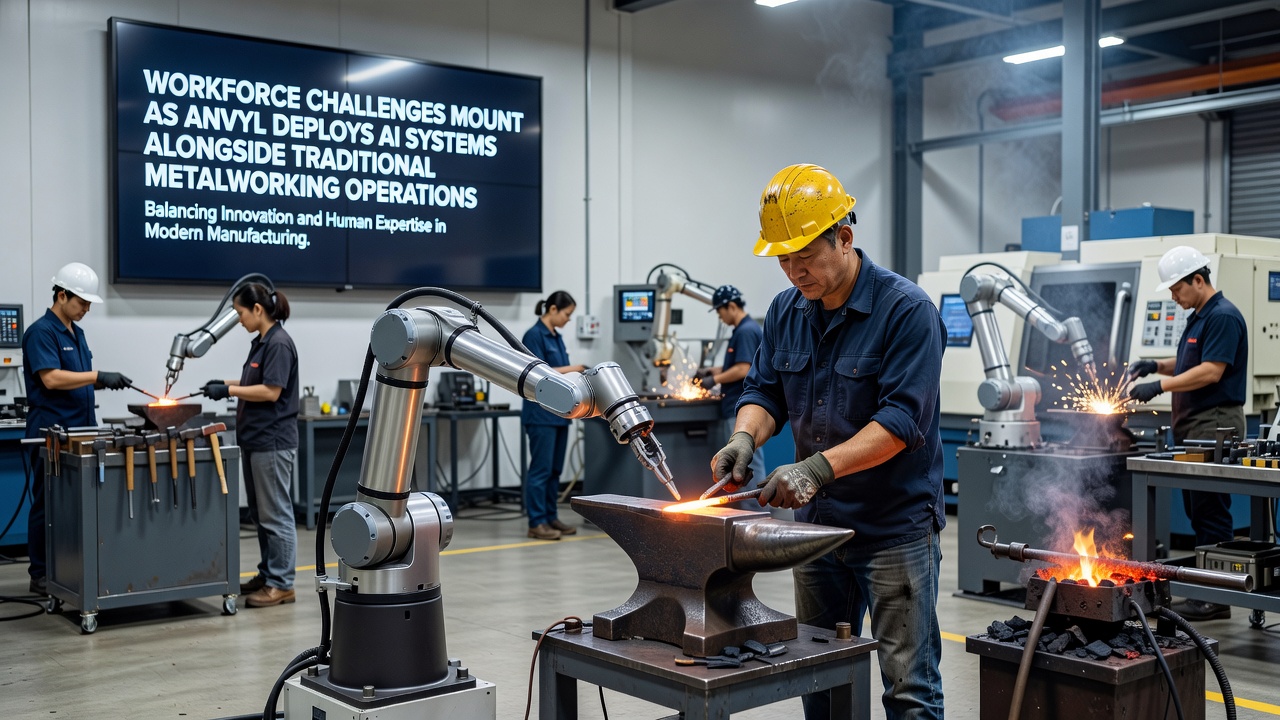
Industry reports compiled by the National Institute of Standards and Technology highlight that facilities combining AI oversight with manual processes achieve higher throughput when cross-trained teams handle both responsibilities. In Ohio, this pattern appears in plants where experienced welders now also validate algorithm-generated quality alerts, reducing scrap rates by documented margins. Parallel developments in other regions, such as those tracked by Statistics Canada in Ontario's automotive supply chain, show similar upskilling curves when digital tools overlay established fabrication lines.
Recruitment challenges surface most clearly in smaller shops that lack dedicated IT staff, where the same individuals who set up tooling must also troubleshoot connectivity issues with cloud-based analytics. State workforce surveys conducted in mid-2026 found that 63 percent of metal fabricators with fewer than 100 employees cited difficulty locating candidates who already possess both sets of competencies, prompting several firms to implement internal mentorship pairings between veteran machinists and newer digital systems specialists.
Training Program Outcomes
Community college partnerships have produced measurable completion rates, with 78 percent of enrollees in the combined machining and data analytics certificates securing related employment within three months of graduation according to placement records released in September 2026. Curriculum outlines emphasize hands-on exercises that alternate between operating legacy equipment and interpreting AI-generated production reports, and instructors report that students adapt more readily when modules progress from familiar mechanical tasks to software interfaces. These programs receive partial funding through federal Workforce Innovation and Opportunity Act allocations administered at the state level.
Conclusion
By October 2026, the coexistence of Anvyl AI platforms and conventional metalworking equipment in Ohio facilities had established new baseline expectations for operator capabilities, with employment data and training metrics reflecting steady adaptation across the sector. Government statistics and institutional reports continue to track these shifts as companies refine hiring criteria and educational pathways to match operational requirements.